Ga Ga for the Last Next Big Thing

In 1976, Lester Bangs greeted the Rolling Stones minor album Black and Blue with a sense ironic relief. “They really don’t matter or stand for anything, ” he wrote, “which is certainly lucky for both them and us. I mean, it was a heavy weight to carry for all concerned. This is the first meaningless Stones album, and thank god!” Slightly less witheringly (but only just so), The Onion’s Noel Murray writes of Spoon’s latest long player, “For those who thought Spoon’s one-two punch of Girls Can Tell and Kill The Moonlight marked the group as a contender for the ‘Best American Band Of The ’00s’ label, Ga Ga Ga Ga Ga may be a disappointment.

It’s not as bad as all that. But it doesn’t sound like the Next Great Statement from a band that has been making instant classics since 1999’s Series of Sneaks. But, now that I think about it, none of Spoon’s records have ever grabbed me on the first listen. Ga Ga Ga Ga Ga was on its fifth spin on my HiFi while I was writing and deleting much of what was going to be this review. It’s a lot better than all that.

The usual hallmarks of a Spoon record – tense rising action punctuated by the occasional raveup, and a minimalist style that emphasizes the silence in between the musical notes – are largely missing. What we have instead is an album by a band in transition. Building upon “I Turn My Camera On,” half the songs on this record – “Don’t You Evah,” “Rhythm & Soul,” “My Little Japanese Cigarette Case” and “Finer Feelings” – ride a similar icy cold R&B groove. These songs are pure Sex – perverse, sweaty, disaffected Sex. The triumph of groove and feeling over song craft perhaps marks Ga Ga Ga Ga Ga as Spoon’s Black and Blue. Would Lester Bangs hear the end of Spoon’s trailblazing period in this disc?

Like no band that I can think of, Spoon was completely made by a single piece of rock criticism, Camden Joy’s millennial summing up of the 90’s varied Next Big Things and how they all ultimately came up short of reinventing rock and roll. Joy, of course, pinned her hopes on Spoon after Elektra dumped them and their power pop record, Series of Sneaks. Who could have predicted the left turn that was the minimalism of Girls Can Tell? Perhaps Ga Ga Ga Ga Ga is the beginning of a similar stylistic change, Spoon’s own “plastic soul” period. Or, perhaps, having failed to reinvent and save rock n roll, Spoon has settled down to put out good records that make the pretty girls dance and swoon.

Portrait of a Charming Man

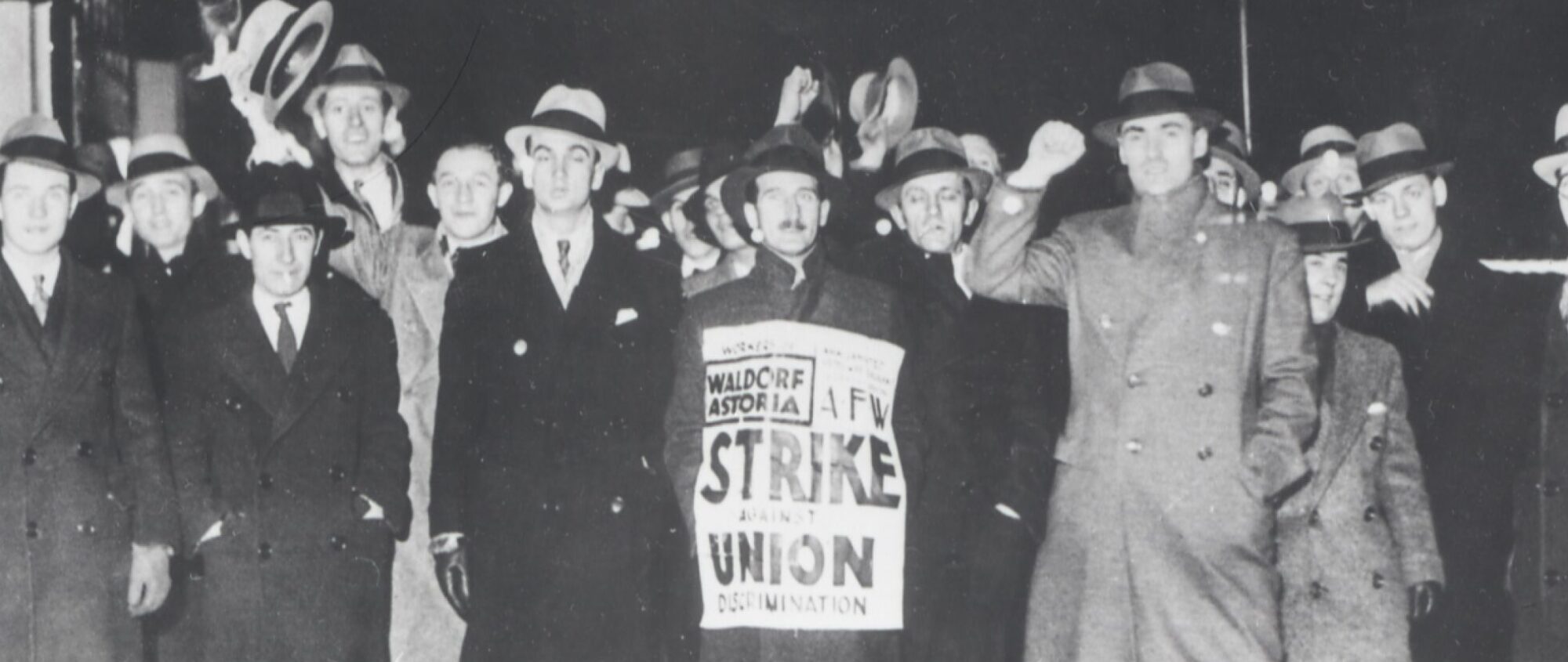
It’s hardly unusual to find a glowing hagiography of a corporate CEO in the pages of a major newspaper. I’m not, per se, opposed to feting J.W. Marriott. If you can get past the creepy fact that he’s a high elder of the Mormon church, he’s just a charming old man who values family, tells hokey jokes and makes a point of being personally courteous to his workers. However, when the Washington Post goes so far as to twist the words of a leader of the hotel employees union to make the CEO of one of the most viciously anti-union companies in the country sound like a good boss, well, that’s when I get mad.

The Marriott corporation runs an anti-union operation as pervasive and sophisticated as Wal-Mart’s. First-line managers are trained to call the corporation’s central union-busting office at the slightest sign of discontent. Corporate’s union busters fly in and do the usual mix of firings, captive audience and one-on-one meetings, and maybe even a slight raise in wages – all in order to keep the status quo of “on-call” employment with no job protection.

The author of the piece, Michael Rosenwald, interviewed the hotel division president of UNITE HERE, John Wilhelm, for the piece. Wilhelm presumably used the opportunity to speak at length about Marriott’s anti-union track record – such as the fact that only ten percent of its operations are unionized compared to better than 30% of Hilton and Starwoods, or the briefly-alluded-to 20 year fight to unionize San Francisco’s flagship Marriott hotel – but the author shallowly focused on the few positive things that Wilhelm could say about J.W. Marriott.

Like, for instance, his common man touch when dealing with employees on a personal basis. Okay, so the man introduces himself and engages in chit chat with the bellmen and doormen when staying at one of his hotels. Well, that’s nice…I guess. But is this only notable because most corporate suits act like total dickheads around the “hired help?” How about the doozy that in the three cities where UNITE HERE has managed to make dealing with the union a cost of doing business that Marriott “live[s] up to the terms of the contracts?” When does living up to the legally enforceable contracts you have made become laudable, or even notable? Only in the context of a company that breaks the law with impunity when resisting its workers’ rights to organize and improve the job.

The Washington Post owes readers a complete picture of Marriott’s union-busting human resources policies, or else it owes us their traditional silence on wrong-doing when praising a charming elder statesman.